
Gallery Applications Oil Painting Commissions James Niehues Ski Map Posters
Home Page
The Mapmaker
Jim Niehues, painting mountain majesties
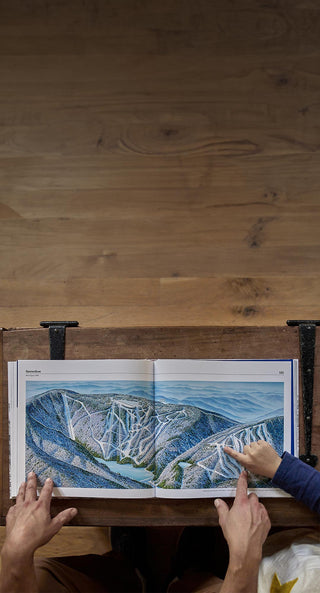
Admit it—it’s mostly what you come for: the maps. To click, behold, scheme and dream. About the slopes you love best, and the ones you’d love to love, if only you could get there.

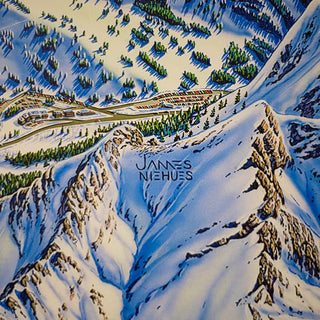
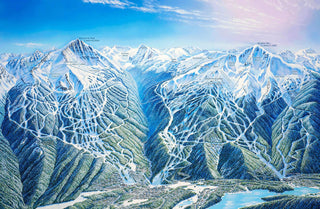
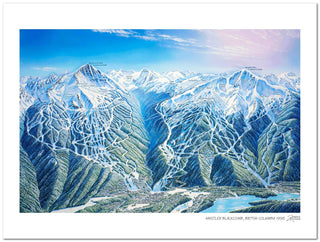
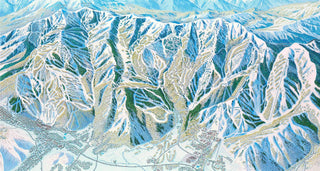
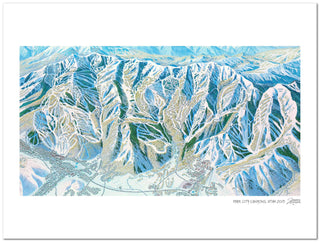
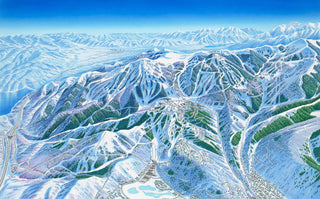
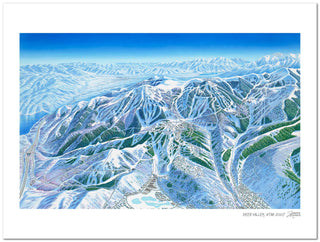
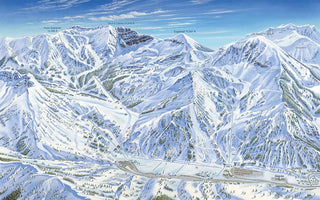
Ever wonder where all the SkiMaps.com trail maps come from? Scan the lower treeline and you just might find the name James Niehues tucked into a corner. He’s one of those rare individuals who finds a way to get paid for doing what he loves best.

The Making of a MapMaker Like most careers, Jim’s took a winding path. After a stint with the army, he held a variety of jobs including offset pressman, ad layout artist, and designer. For seven years he was a partner in Cowden-Niehues Advertising in Grand Junction, Colorado, until he decided he was ready for a change. He dissolved the partnership and headed for Denver.

In 1987 he looked up Bill Brown, the reknowned ski map illustrator. He was hoping for a way into the trade.

"I had always admired Bill’s trail map illustrations, and through the years I had the opportunity to produce a few aerial views myself," Jim said. "I just wanted to meet him, show him my work and hopefully, some day he would think of me when his schedule was full and another project came in."

He didn’t have much of a wait. Bill, it turned out, was throwing himself into train video documentaries and needed someone to pick up the trail map work. Jim walked out of the meeting with his first trail map project, an inset for Winter Park, Colorado.

The next big break came when the newly formed Snow Country Magazine called Bill to illustrate a full spread illustration each month of featured resorts. Bill referred them to Jim. When the magazine printed Jim’s resort illustrations, he found himself getting unimagined exposure to the industry he was serving. Today, his illustrations are featured in Ski Magazine, dominate the Ski Area Screen Saver, and, of course, make a sizeable contribution to the SkiMaps trail map database.

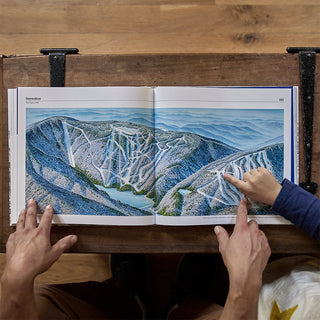
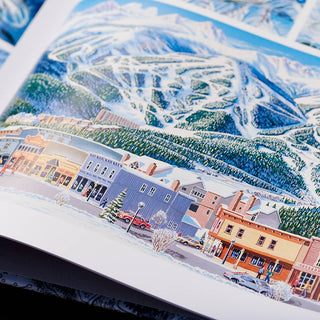
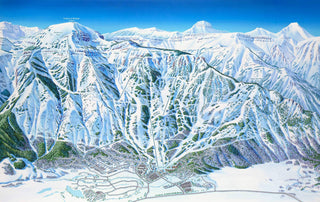
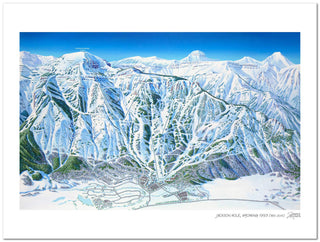
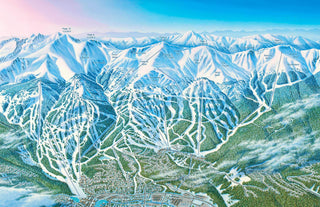
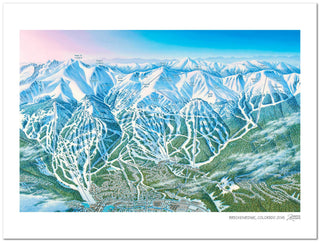
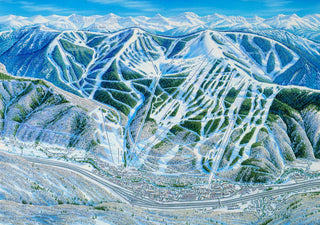
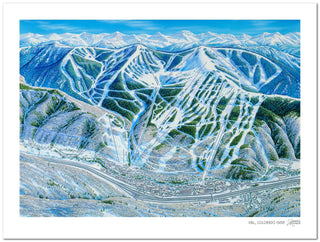
After his early work illustrating resorts like Vail and Jackson Hole, he went on to complete more than 100 resort maps including areas in Canada, New Zealand, Australia, Japan and Korea. He has also produced hiking maps for five national parks.

On the ground and in the air When a typical map project is initiated, Jim gathers a variety of materials that may include aerial photographs, past trail maps, blueprints of trail system, and various ground-level photos that show building character.

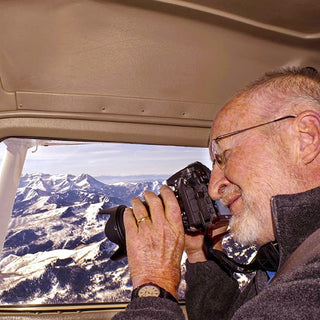
He personally visits and shoots the aerial photography for most large ski areas, but many smaller resorts supply the aerials with Jim’s direction. The resort is thoroughly photographed starting at 4,000 feet above the summit and then dropping to 2,000 feet and so on until the last pass is about mid-mountain to cover the base facilities. Four rolls of 36 exposure film are usually shot. Telephoto shots capture the detail of each run.

"If I’ve flown the area, I’ve already formed the view in my mind that will best show all the slopes before I review the photos," Jim said. "A complicated mountain with multiple faces requires twisting the surfaces to get the best view of all runs. It’s very important to keep distances relative and credible.

"From all the gathered material, I’ll sketch a small thumbnail and if two views are near equally effective, I’ll fax these to the resort for review. The large sketch is then produced as a pencil on vellum, which is blueprinted and sent to the client for their review and approval. After I receive the approval or alterations, I proceed to the finished rendering."

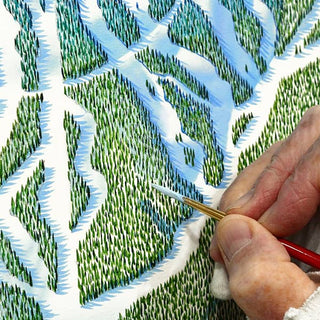
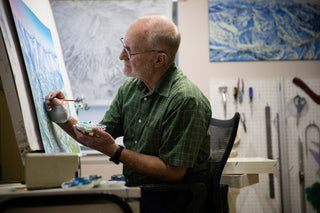
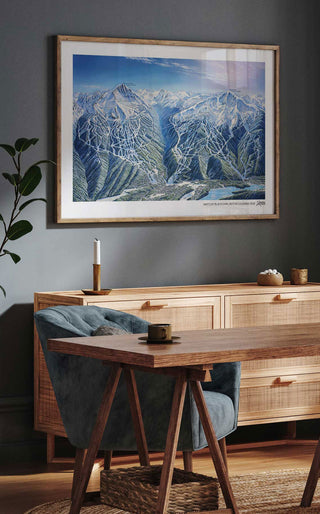
Surprisingly, computers don’t come into the picture yet. "The brush is still the best tool to reproduce the endless variety of colors, textures and contrasts in nature," Jim says. "It’s more spontaneous and versatile, and creates the scene in a more natural way. Gouache [an opaque watercolor] is my favorite medium. I use the airbrush to put in the sky, clouds and the snow on the slopes. Then I use a brush for the rest of the rendering. A medium to large resort is rendered on a 30x40 prepared illustration board. This system makes it easy to alter the illustration for future expansions."

"After the illustration is painted, I take color snap shots, including close-ups, for yet another approval stage. Any final alterations are made before the illustration is sent to the photo lab for 8x10 transparencies. The 8x10 is sent out to the resort and scanned into the computer. At this point the trail names and symbols are added and the files are sent to the printer."

Jim recognizes his good fortune in his line of work. "It incorporates all the things I love to do: a little traveling, aerial photography and art in a casual business environment." Then comes the slow grin. "And, oh yeah, did I mention skiing?"


Home | Gallery | Applications | Commissions | Posters
Questions?  Comments? Feedback?